Working Bali hours when your team is eight time zones away
The hard part of working from Bali isn't discipline. Almost nobody moves here and then stops working. The hard part is that Bali sits seven or eight hours ahead of London, fifteen or sixteen ahead of San Francisco and two or three behind Sydney, so your morning belongs to nobody and your evening belongs to a meeting room you can't see. Everything below follows from that, and so does the reason a proper desk at the villa matters more here than it did at home.
Your morning is the best working time you'll ever get
Between six and eleven, Europe is asleep, America is asleep, and Slack is silent. That's four or five hours of the uninterrupted work most people spend their whole career failing to find. It's also the coolest part of the Bali day and the only stretch when the traffic moves.
The mistake is spending it on the things that feel like work: email, tickets, the standing docs. Those can survive an interruption. Put the writing, the thinking and the building in the morning, and let the afternoon take the admin.
The afternoon is a write-off, so plan for it
By two o'clock it's thirty-one degrees and you've eaten. Trying to do your hardest thinking then is how people conclude they've lost their edge. Schedule the shallow work here, or get out of the room entirely: this is the slot that the recovery clubs were built for, and an hour of sauna and cold water at three buys you back the evening.
The evening calls are what actually wreck the week
If your team is in London, your overlap starts around four in the afternoon and runs to eight. If they're in New York it starts around nine at night, and on the US west coast around midnight. That's manageable twice a week and corrosive five times, because it eats the one thing that makes the morning work: sleep.
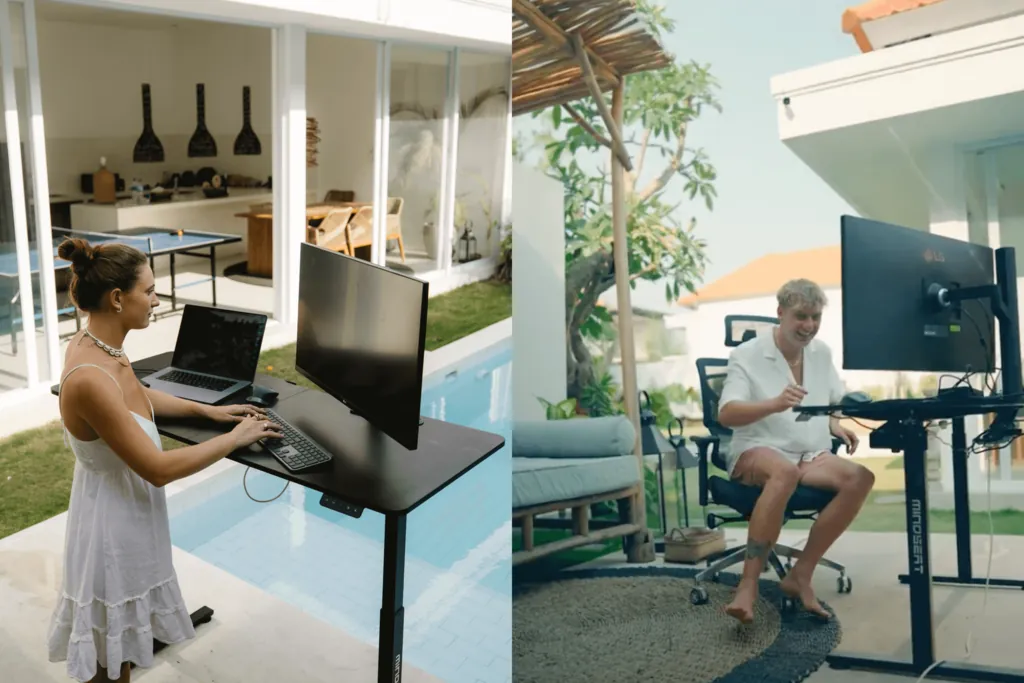
Two things help more than any app. Agree a fixed overlap window with your team and defend it, so calls land inside it rather than scattered across the night. And make the calls themselves less costly: stand for them at a height-adjustable desk with the camera at eye level, because sitting slumped in a dining chair at eleven at night is what makes a thirty-minute call feel like two hours.
Stop letting screens eat the day
The single biggest recoverable loss in a remote day isn't procrastination, it's window-switching. Every time you alt-tab between the brief and the document you pay a few seconds and a bit of attention, a few hundred times a day. A second screen removes it: a 27-inch monitor is $110 a month, and the people who add one describe the same result, which is that the same work finishes earlier.
Pick a rhythm and let the island keep it
Bali is unusually good at enforcing a schedule if you let it. The light goes between six and half past, all year. The surf is best early. Offerings go out at the same hour every morning. Attach your day to those instead of to a productivity system and it holds up better than any timer: work at first light, swim when the heat arrives, take the calls after dark.
If you're still choosing where to base yourself, the noise and the commute change this calculation completely — which Bali area fits you best goes through it.
Where the hours actually go
A good rhythm and a quiet villa will carry you a long way, and so will a team that respects an overlap window.
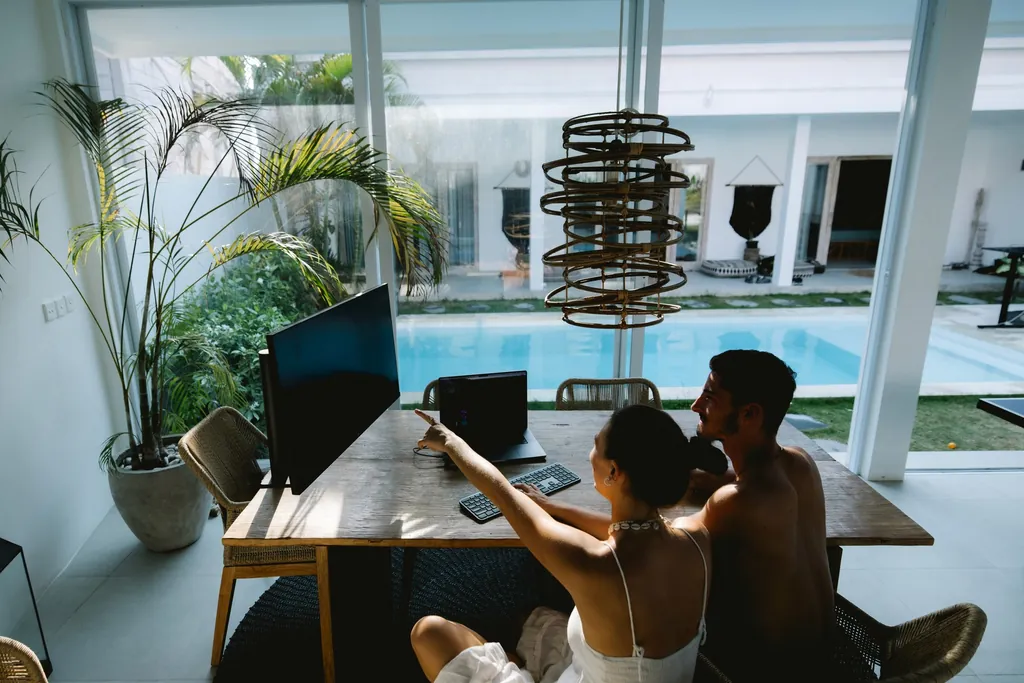
What none of that fixes is the eleven hours a day you spend at the table. A dining table at 75 cm and a rattan chair will undo a perfect schedule by Thursday, and no amount of planning makes a laptop screen into two.
That part is ours. A height-adjustable desk at $50 a month, an ergonomic chair at $70, a 32-inch 4K monitor at $160, or all three as The Best at $345. Delivered the same day, set up, and still there at midnight when San Francisco wakes up.